 Automotive
Identify change
Physiological and behavioural systems detect a sustained, policy-relevant change.
The same sensing layer may support several applications, but the evidence requirement is different for each. We separate near-term evaluation targets from longer-term strategic opportunities.
A driver can look unusual for many reasons. Physiological change alone is also non-specific. The opportunity is multimodal fusion: combining physiology, behaviour, vehicle state and verification over time.
Does sustained physiological change improve confidence or timing in a defined driver-incapacitation or unresponsiveness workflow?
Estimated heart rate, trend, confidence and signal availability—not an illness label.
DMS cues, vehicle behaviour, hands-on status, driver response and OEM policy remain essential.
Run a controlled feasibility study before defining any safety function or threshold.
OMS can identify presence, position, posture and movement. PIC asks whether physiological information could reduce ambiguity when an occupant is still, distressed or unable to interact.
This may be important, but it is not a complete physiological assessment and can have benign explanations.
This is the evaluation FaceMed proposes—not an assumption that one signal can determine the cause.
As driving responsibility changes, human monitoring does not necessarily disappear. The design problem evolves from driver compliance toward broader occupant understanding and service response.
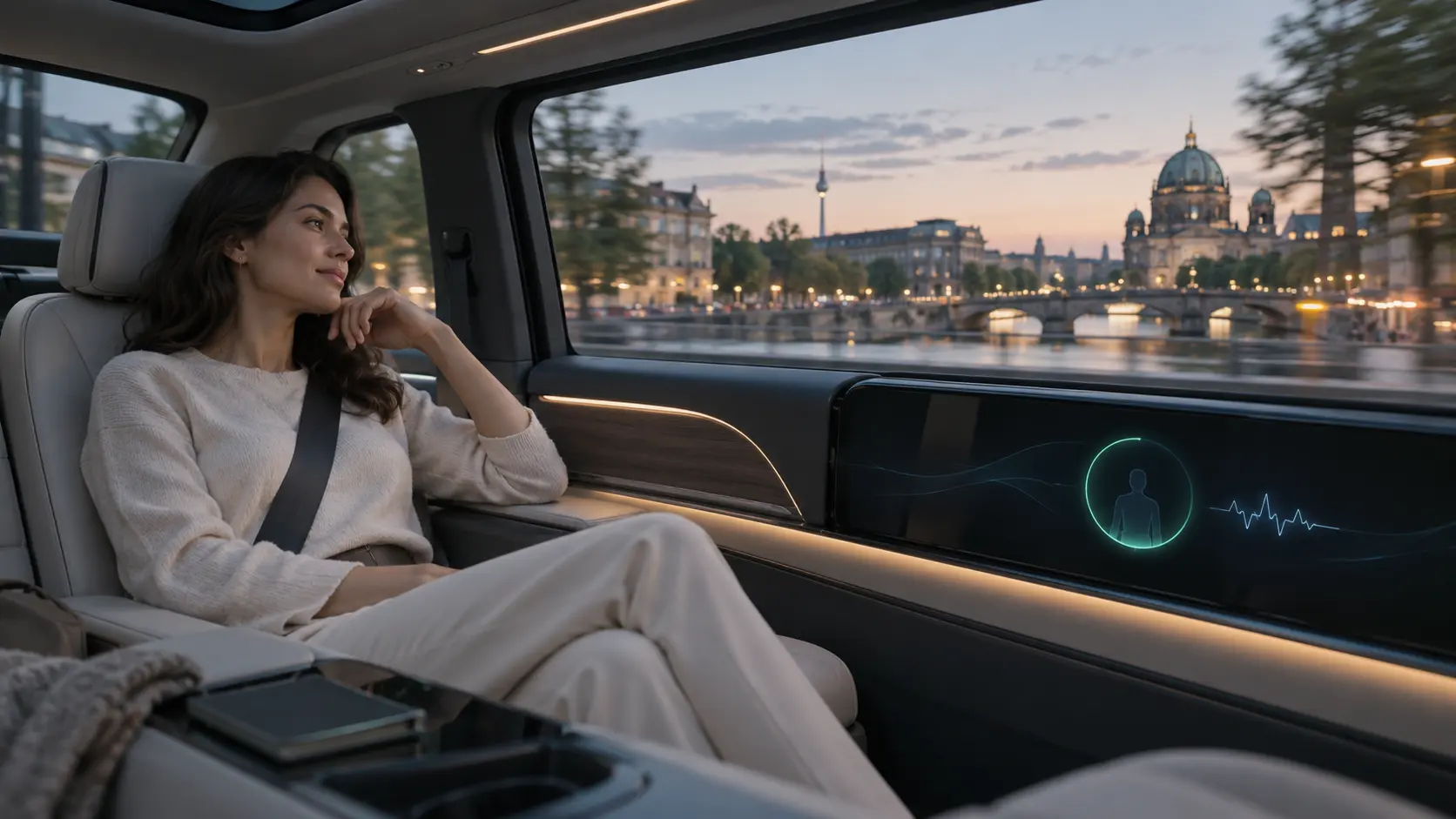
Physiological and behavioural systems detect a sustained, policy-relevant change.
The vehicle or remote service asks whether the occupant is OK and evaluates response.
The operator modifies the journey or connects support according to validated procedures.
Emergency contacts or services may be involved only under operator policy and applicable rules.
Conceptual OEM/operator integration. These downstream actions are not current FaceMed product capabilities.
Beyond safety, validated physiological trends may support personalised cabin experiences while remaining clearly separated from safety decisions.
Explore whether physiological trends can inform lighting, climate, audio or seat programmes.
Research derived measures only where training data, individual baselines and evidence support the interpretation.
Explore changes relative to an individual baseline rather than relying only on one-size-fits-all thresholds.
We will help define the signal, baseline, operating conditions and decision criteria for a scoped evaluation.