 Automotive
Video input
Receive suitable facial video from a cabin camera or evaluation camera.
PIC applies computer vision and physiological modelling to subtle temporal changes in facial video, producing an estimated signal together with the quality information needed to interpret it responsibly.
The algorithm is only one part of the system. Image formation, illumination, compression, motion, face coverage and compute placement all affect whether a useful signal is available.
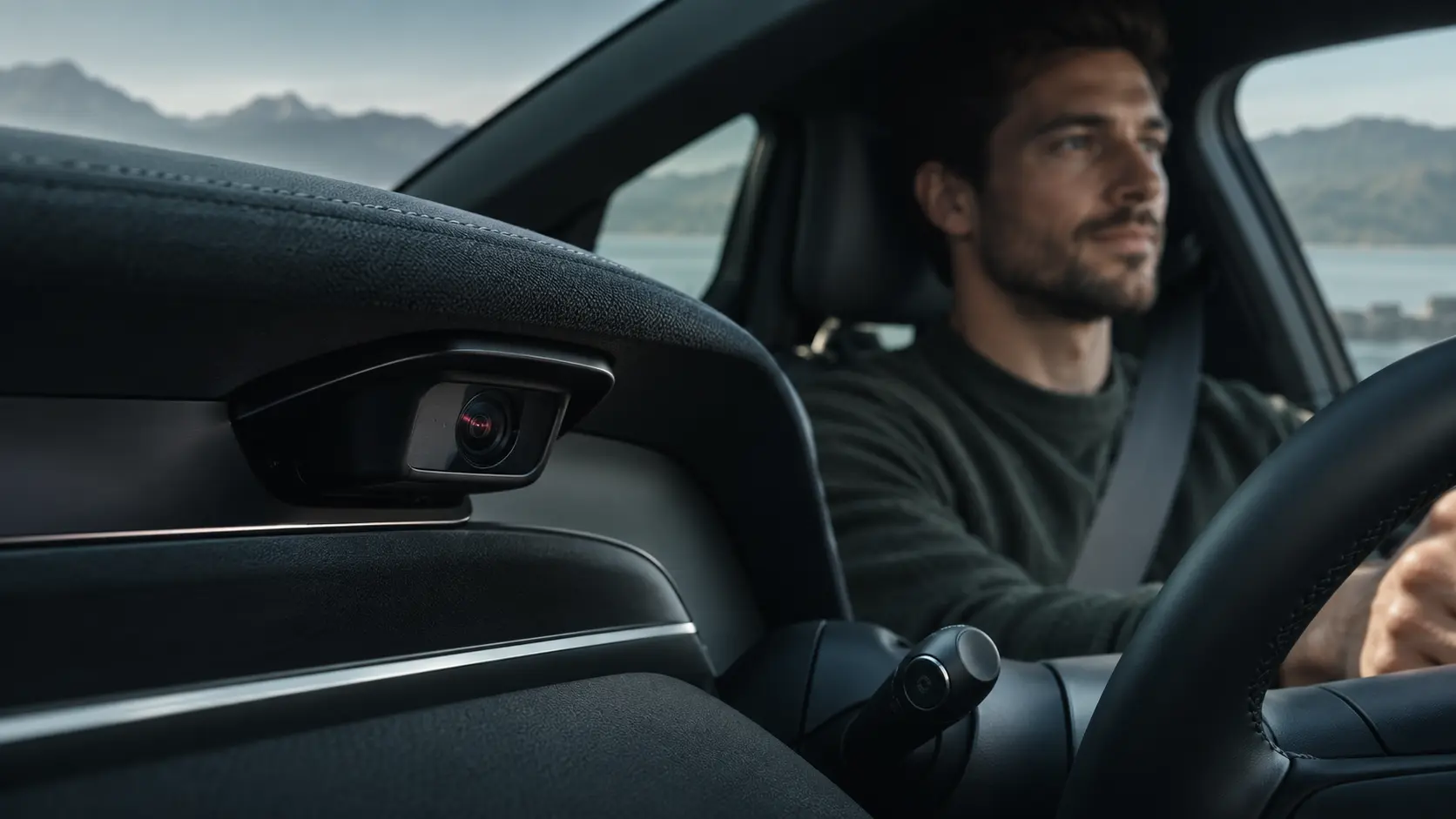
Receive suitable facial video from a cabin camera or evaluation camera.
Assess face visibility, motion, lighting and other conditions relevant to signal extraction.
Estimate heart-rate-related information from temporal visual patterns.
Expose the estimate alongside quality and availability for downstream fusion.
Camera-based physiological monitoring depends on subtle temporal information. Driving adds motion, vibration, rapid illumination changes and image-pipeline effects that can obscure the signal.
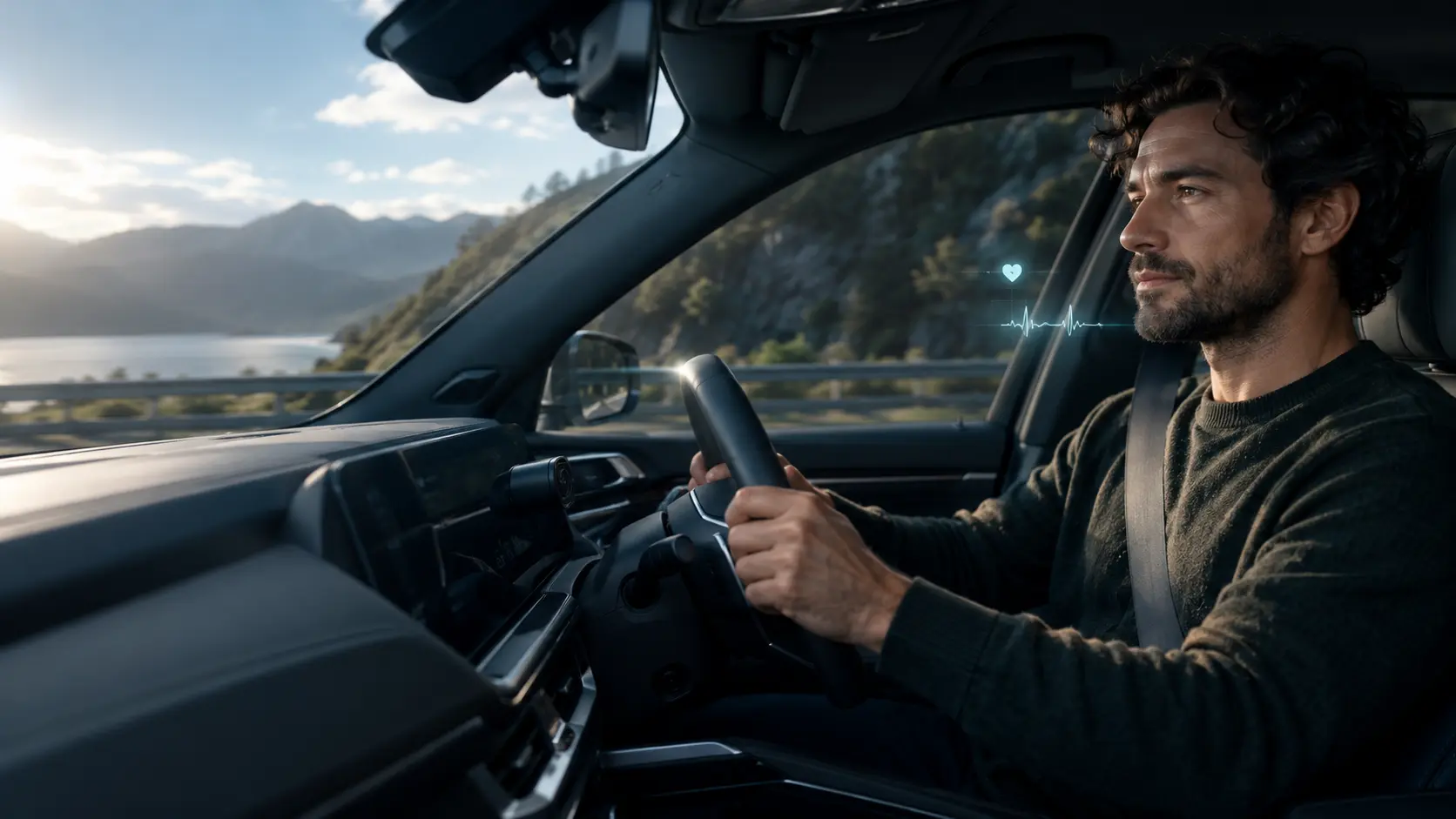
Head turns, facial movement, road vibration and relative camera motion introduce artefacts that must be separated from physiological change.
Sun, shadow, tunnels, night lighting and reflections alter exposure and spectral conditions from moment to moment.
Frame timing, exposure, gain, denoising, compression and ISP processing can preserve—or remove—the information required for estimation.
Observed heart-rate accuracy under evaluated steady conditions.
Observed across evaluated driving conditions varying in speed, road surface and lighting.
Performance figures describe evaluated conditions. Results depend on the camera, image pipeline, subject visibility and operating environment; target-platform validation remains essential.
FaceMed’s broader platform experience in multimodal clinical AI informs the discipline behind PIC: temporal modelling, large-scale physiological video learning, reviewable output and explicit limits.
PIC analyses temporal visual information rather than a single still image.
A useful automotive component must be able to communicate uncertainty and non-availability.
Every sensor, illumination and ISP combination requires evidence on the target platform.
PIC has a defined role in the cabin stack. It processes suitable facial video and exposes an estimate with quality information; the OEM or integrator owns fusion, HMI, fallback and response policy.
Facial video, timing metadata and an agreed image pipeline.
Quality assessment, inference and signal-availability logic.
Estimated signal, trend, confidence and availability fields.
Behavioural fusion, verification, HMI, fallback and response.
Signal accuracy, vehicle robustness, application validity and production assurance answer different questions. A credible programme establishes them in sequence.
Compare the physiological estimate against an agreed reference.
Test motion, vibration, illumination and occupant variation.
Establish whether the signal improves the defined workflow.
Address programme, safety, cybersecurity, privacy and regulatory requirements.
Error distribution, agreement bands and results broken down by protocol and condition.
Usable time, time to estimate, degraded states and recovery after difficult conditions.
Transparent analysis of motion, light, occlusion, face coverage, camera and ISP sensitivity.
We can start with a structured review of sensor, illumination, image processing, compute and target use case.